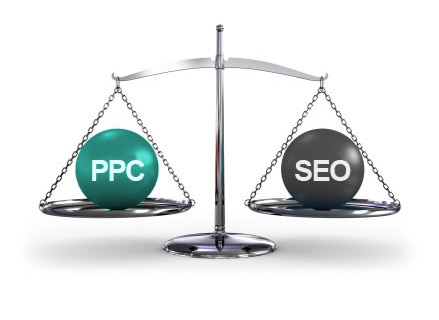
Search engine optimization is one of the best ways to promote your business and to get more traffic for your site without spending any money. However, pay-per-click advertising can also get you results - sometimes faster. Which one is right for your business?
There are a number of things to consider when you are trying to determine whether you should focus your efforts on SEO or PPC - or whether you should switch from one to the other when faced with a particular set of circumstances. Here are a few things to ask yourself when trying to decide on SEO or PPC for your business:
What's Your Budget?
Pay-per-click advertising can get very expensive. Even if you're fortunate enough to have keywords that don't have a high cost-per-click (CPC), there is still a relatively low average conversion rate for most ads, and so you will need to pay for a lot of clicks before you start seeing sales and e-mail opt-ins. Determine how much you have to spend, and if it's not enough to make it worth it, focus on building your SEO while you save for an appropriate budget for a successful ad campaign.
How Fast Do You Want to Get Results?
Everyone wants their business to be an overnight success, yet that's not going to be possible for most people. Think in more realistic terms and decide how quickly you want to - or need to - get results. SEO is a long-term play, but once you start making gains with it, you will attain a more stable position for your web presence. PPC will achieve faster results, which is useful if you are a small startup, you are introducing a new product or service, or you are trying to turnaround poor quarterly results.
While PPC can get you quicker results, it's not guaranteed. You'll get more prominent exposure for your site, but you may not get the click-through that you need. You have to have a solid campaign behind your budget.
How Much Time Do You Have for Study?
While anyone can learn SEO, not everyone has the time to do it. Casual reading of SEO blogs can help you to understand basic concepts like the need for quality links or how to use keywords appropriately. But how do you get a quality link? How do you know what keywords to target?
You have to devote the time to studying SEO to learn successful strategies and then to implement them. This is especially important since search algorithms are always changing, and you may need to change your strategies quickly to see results. If you don't have the time to devote to learning and staying abreast of successful SEO, it may be worth investing in PPC instead - or hiring someone else to do your SEO for you.
What's Your Competition?
Highly competitive fields may result in two things: The cost-per-click (CPC) of the keywords you want to target for a PPC campaign will be too much for your budget, or if you are trying to use SEO instead, your page will become buried in search results for those keywords. There are a couple of things you can do. Take the slow and steady approach with SEO, or increase your budget for PPC. You can also target more niche keywords that have lower competition to rank your site faster or to manage a PPC campaign that fits your lower budget.
Ultimately, there is no "right" choice when it comes to SEO or PPC. What's right for your business will depend on your budget, your niche, and the results you are trying to achieve. Consider the answers to these questions when trying to make the right choice for your business.
Have you been more successful with SEO or PPC with your business? Share your thoughts in the comments!
About The Author: Chloe Trogden is a seasoned financial aid writer. Her leisure activities include camping, swimming and volunteer work.
Did you find this article helpful? Please let Chloe and myself know by leaving us your valued comments in the comments section below.
Would you like to guest post on the blog? Please use the Contact tab above to get in touch if you write business-related articles or articles on the topics of Internet Marketing, Affiliate Marketing, Social Media Marketing/Optimisation (SMO), Blogging, Search Engine Optimisation (SEO) or Search Engine Marketing (SEM).
Related articles:
Common Google AdWords Mistakes And How To Avoid Them
How To Set A Budget For Your Business PPC Campaign
For a list of helpful articles on SEO and PPC, use the following links:
http://www.derekjones.co/search/label/SEO
http://www.derekjones.co/search/label/SEO%20Tips
http://www.derekjones.co/search/label/PPC
If you found this or any of my other posts helpful, don't forget to share the posts to your favourite networks using the toolbar below or by using the "+1" and "Share" buttons located at the bottom of each post.
As ever, if you want to stay up to date with the latest blog posts, don't forget to follow via Google Friend Connect (button on sidebar), on NetworkedBlogs, via Email (maximum of one email per day), on Facebook and Google+ or by subscribing to our blog feed at:
http://feeds.feedburner.com/DereksHomeAndBusinessBlog
You can also follow me on Twitter @djones1509, Google+ and on Facebook at:
http://www.facebook.com/djones1509
https://plus.google.com/104849975941505117776
Until my next post on Wednesday on how to make your business cool and why you'd want to, have a great and productive week ahead!
© 2013. This article is DMCA protected. Republication is prohibited.
There are a number of things to consider when you are trying to determine whether you should focus your efforts on SEO or PPC - or whether you should switch from one to the other when faced with a particular set of circumstances. Here are a few things to ask yourself when trying to decide on SEO or PPC for your business:
What's Your Budget?
Pay-per-click advertising can get very expensive. Even if you're fortunate enough to have keywords that don't have a high cost-per-click (CPC), there is still a relatively low average conversion rate for most ads, and so you will need to pay for a lot of clicks before you start seeing sales and e-mail opt-ins. Determine how much you have to spend, and if it's not enough to make it worth it, focus on building your SEO while you save for an appropriate budget for a successful ad campaign.
How Fast Do You Want to Get Results?
Everyone wants their business to be an overnight success, yet that's not going to be possible for most people. Think in more realistic terms and decide how quickly you want to - or need to - get results. SEO is a long-term play, but once you start making gains with it, you will attain a more stable position for your web presence. PPC will achieve faster results, which is useful if you are a small startup, you are introducing a new product or service, or you are trying to turnaround poor quarterly results.
While PPC can get you quicker results, it's not guaranteed. You'll get more prominent exposure for your site, but you may not get the click-through that you need. You have to have a solid campaign behind your budget.
How Much Time Do You Have for Study?
While anyone can learn SEO, not everyone has the time to do it. Casual reading of SEO blogs can help you to understand basic concepts like the need for quality links or how to use keywords appropriately. But how do you get a quality link? How do you know what keywords to target?
You have to devote the time to studying SEO to learn successful strategies and then to implement them. This is especially important since search algorithms are always changing, and you may need to change your strategies quickly to see results. If you don't have the time to devote to learning and staying abreast of successful SEO, it may be worth investing in PPC instead - or hiring someone else to do your SEO for you.
What's Your Competition?
Highly competitive fields may result in two things: The cost-per-click (CPC) of the keywords you want to target for a PPC campaign will be too much for your budget, or if you are trying to use SEO instead, your page will become buried in search results for those keywords. There are a couple of things you can do. Take the slow and steady approach with SEO, or increase your budget for PPC. You can also target more niche keywords that have lower competition to rank your site faster or to manage a PPC campaign that fits your lower budget.
Ultimately, there is no "right" choice when it comes to SEO or PPC. What's right for your business will depend on your budget, your niche, and the results you are trying to achieve. Consider the answers to these questions when trying to make the right choice for your business.
Have you been more successful with SEO or PPC with your business? Share your thoughts in the comments!
About The Author: Chloe Trogden is a seasoned financial aid writer. Her leisure activities include camping, swimming and volunteer work.
Did you find this article helpful? Please let Chloe and myself know by leaving us your valued comments in the comments section below.
Would you like to guest post on the blog? Please use the Contact tab above to get in touch if you write business-related articles or articles on the topics of Internet Marketing, Affiliate Marketing, Social Media Marketing/Optimisation (SMO), Blogging, Search Engine Optimisation (SEO) or Search Engine Marketing (SEM).
Related articles:
Common Google AdWords Mistakes And How To Avoid Them
How To Set A Budget For Your Business PPC Campaign
For a list of helpful articles on SEO and PPC, use the following links:
http://www.derekjones.co/search/label/SEO
http://www.derekjones.co/search/label/SEO%20Tips
http://www.derekjones.co/search/label/PPC
If you found this or any of my other posts helpful, don't forget to share the posts to your favourite networks using the toolbar below or by using the "+1" and "Share" buttons located at the bottom of each post.
As ever, if you want to stay up to date with the latest blog posts, don't forget to follow via Google Friend Connect (button on sidebar), on NetworkedBlogs, via Email (maximum of one email per day), on Facebook and Google+ or by subscribing to our blog feed at:
http://feeds.feedburner.com/DereksHomeAndBusinessBlog
You can also follow me on Twitter @djones1509, Google+ and on Facebook at:
http://www.facebook.com/djones1509
https://plus.google.com/104849975941505117776
Until my next post on Wednesday on how to make your business cool and why you'd want to, have a great and productive week ahead!
© 2013. This article is DMCA protected. Republication is prohibited.